Designing from scratch


I design for every SIXT+ touchpoint; from inception till today's 20000 subscribers. This case study focusses on the subscription configuration on web.
What is the problem at hand, user need and business goal?
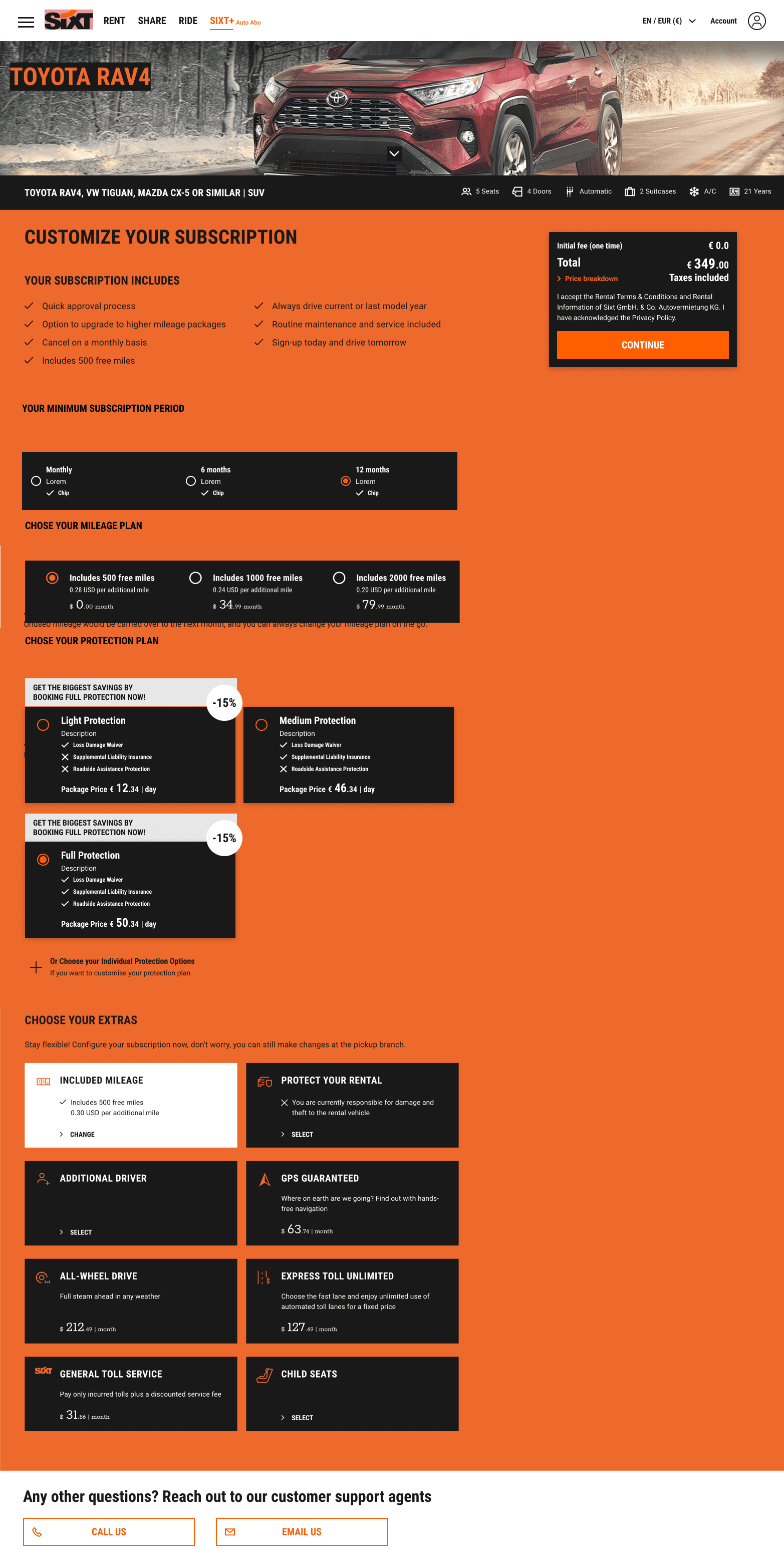
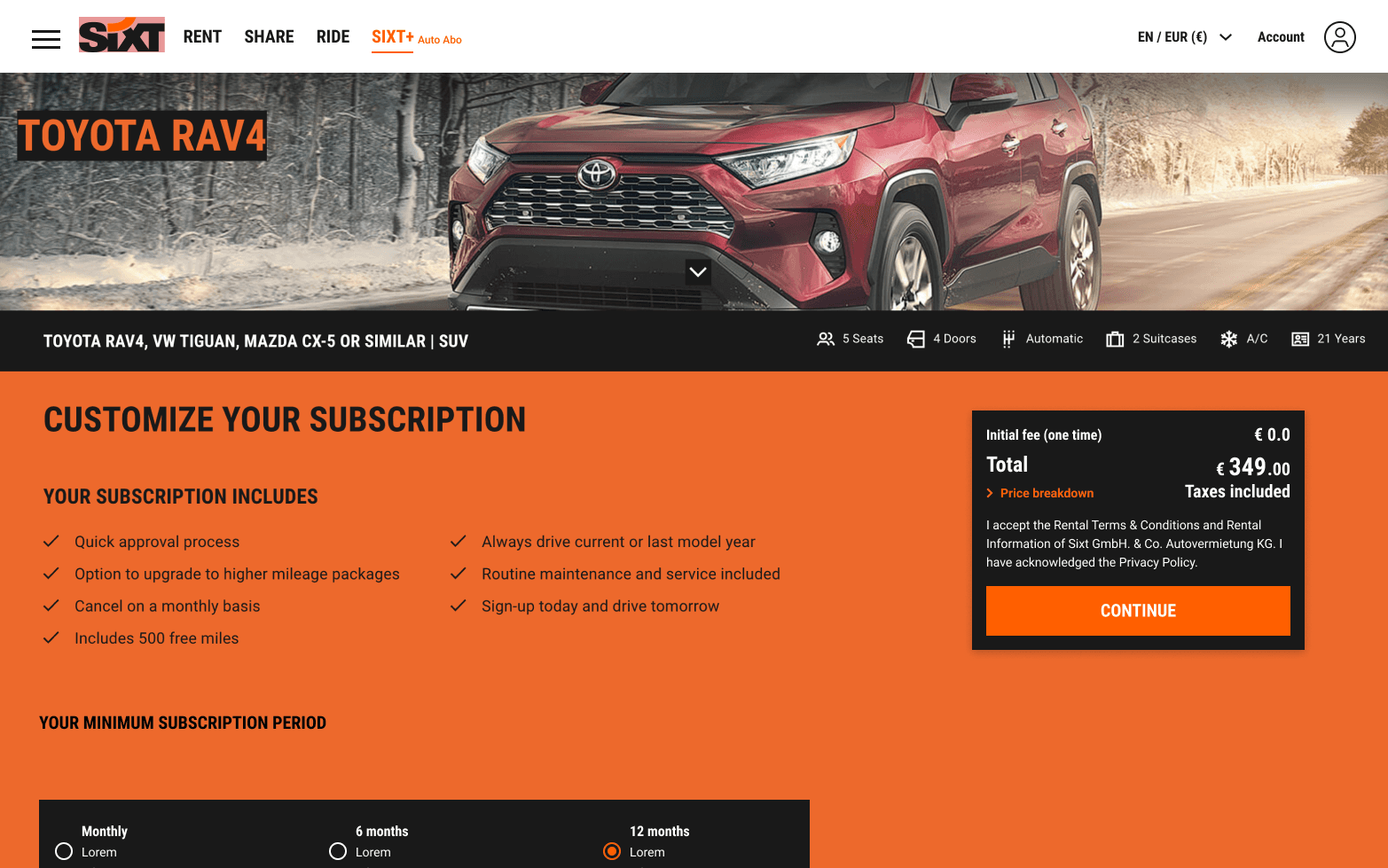
The beginning Version 0
Covid hit caused aversion of people to rent out cars previously driven by others, coupled with a slump in the private car buying intention, situation was ripe for SIXT to introduce a subscription service: SIXT+
Combining the BE of multiple 1 month rentals stacked together, the FE also followed a quick deployment with UI from Rent business. This was the first output.
Pros
First functional product and web booking funnel
Well laid out price box
Well arranged config options all displayed, easy for users to compare and budget
Cons
Color overdose, contrast issues
Layout, colors, components and responsiveness inherited from Rent
Big and sharp components, with less breathing space
Why would a design intervention be meaningful in problem solving?
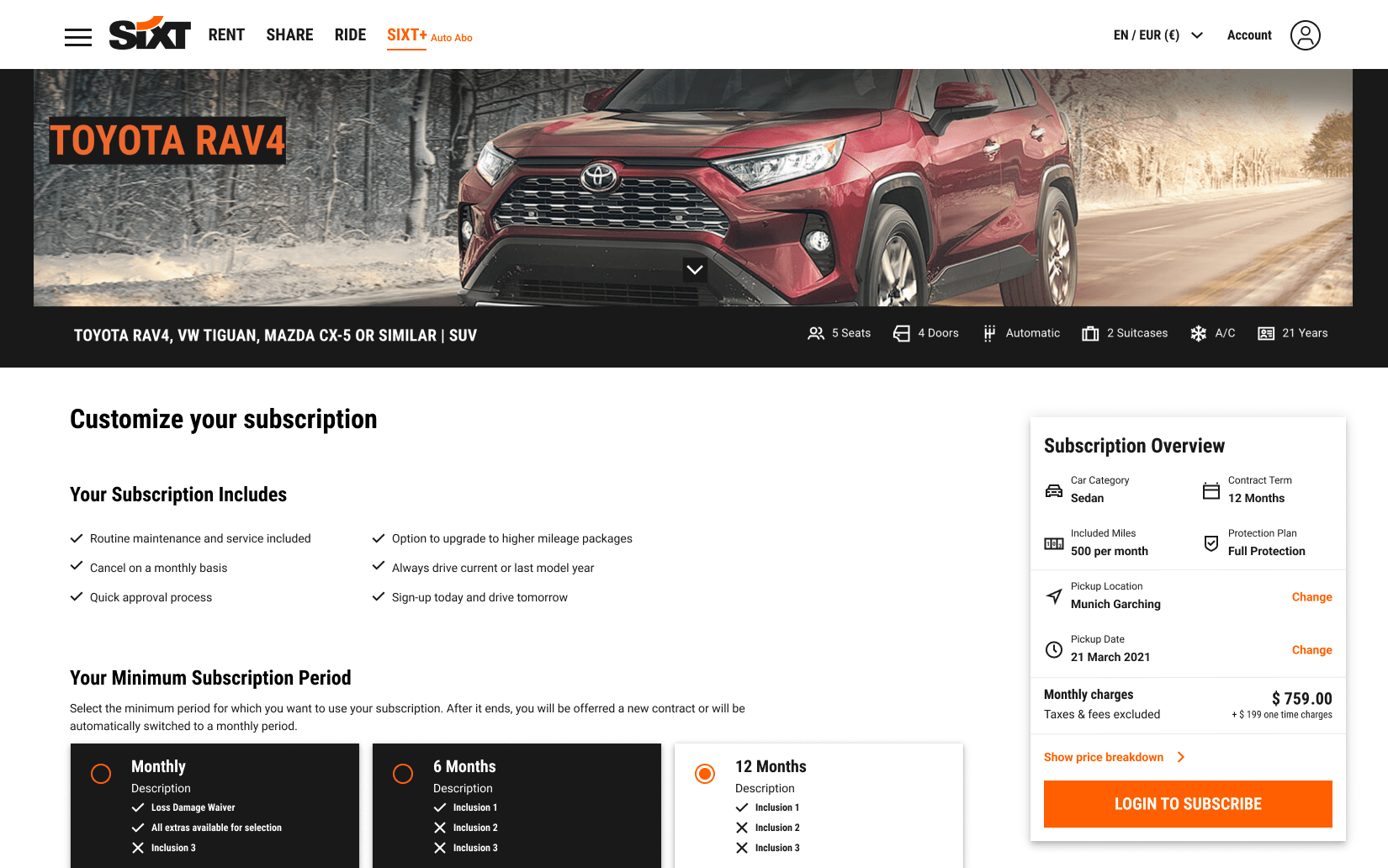
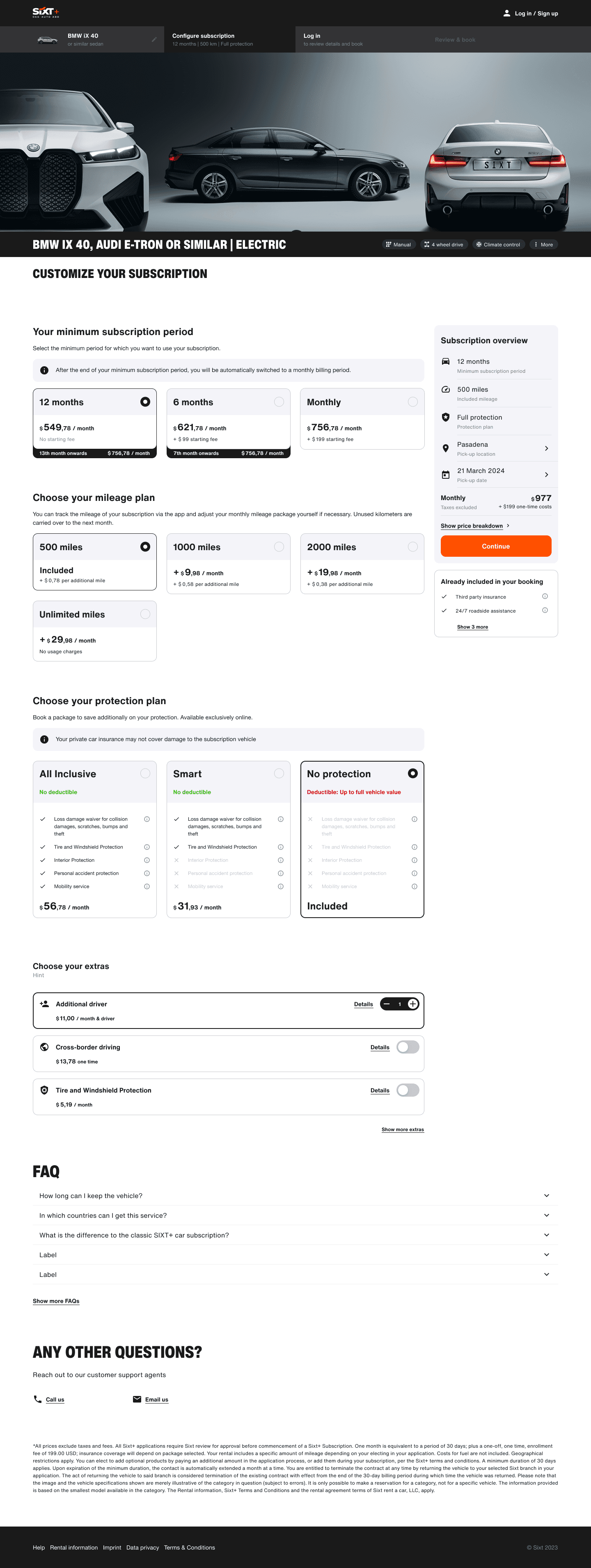
Version 2
By 2022, customer initiated bookings were increasing, and it was crucial to improve the FE, while the BE was being made robust. A clear investment in design, starting with UI, focussing on UX soon.
Notable UX improvements
Improved right panel with overview
Show/hide price details
Added more information for decision making
Introduced FAQ section
Introduced a customer support contact section
Moved to a 3+1 column responsive layout
Notable UI improvements
Cleaner look with white background
Improved right panel with overview as well as show/hide price details
Improved hero image and standardised
Decreased extra contrast on selection of config items
Made the discount nudges subtle
Version 3
While the company went into a rebrand exercise through 2024, the opportunity arose to relook at entire navigation structures, and to evaluate what is the best way to configure a subscription for the user. All versions here on out, have completely different navigations, structure and information presentation.
Notable UX improvements
Introduced a step horizontal tabbed approach
Opened up right panel for price details
Booking inclusions as a section
Notable UI improvements
Complete UI overhaul with rebranding
Changed components to be more breathable
How are the features prioritised, the information architecture arranged and presented?
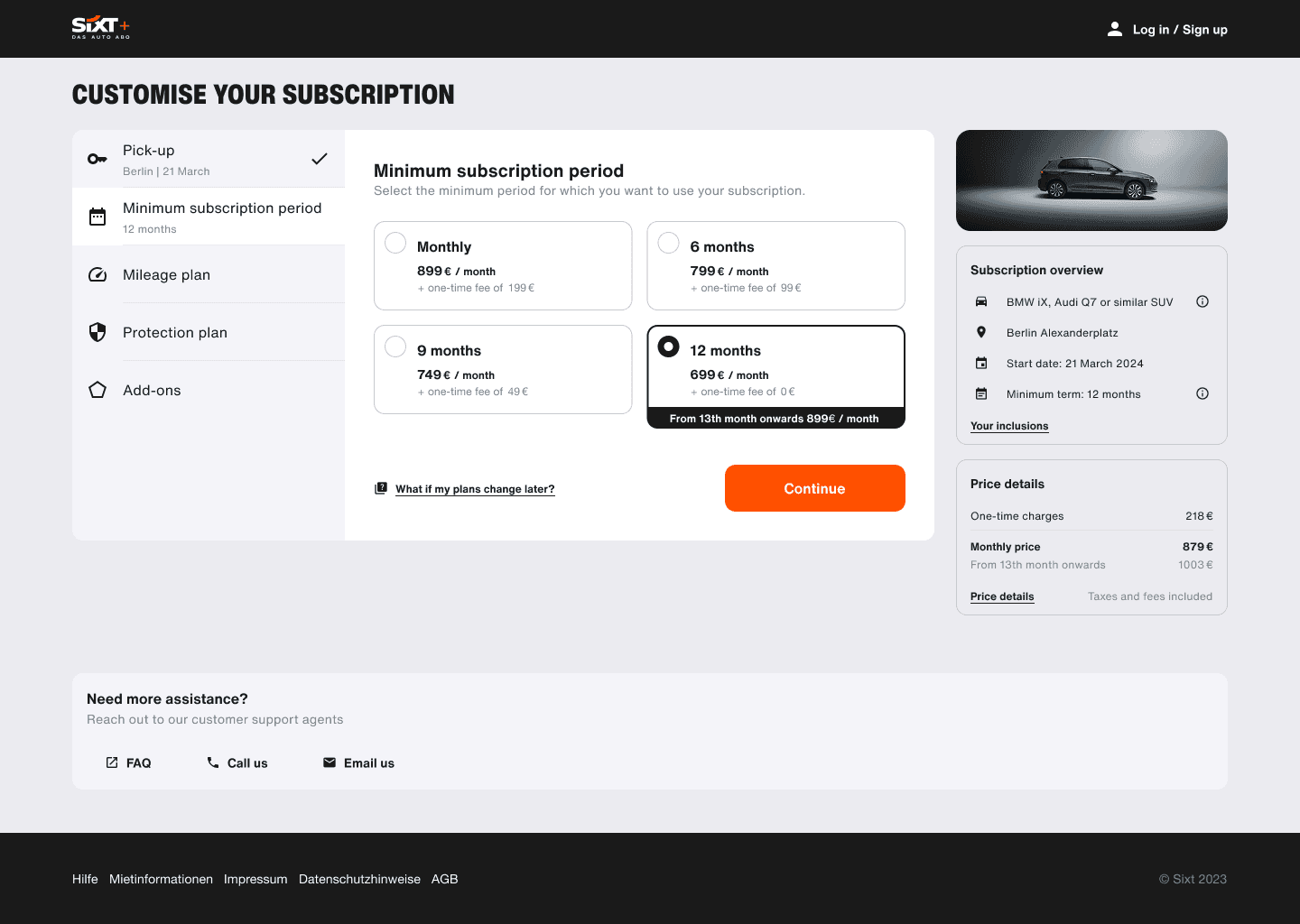
User testing
This was a crucial pivot point in the configuration where I tested a tabbed layout, against a single page vertical layout from the previous version. Similar tests were done on the app, with over 12 participants at Munich TestEssen.
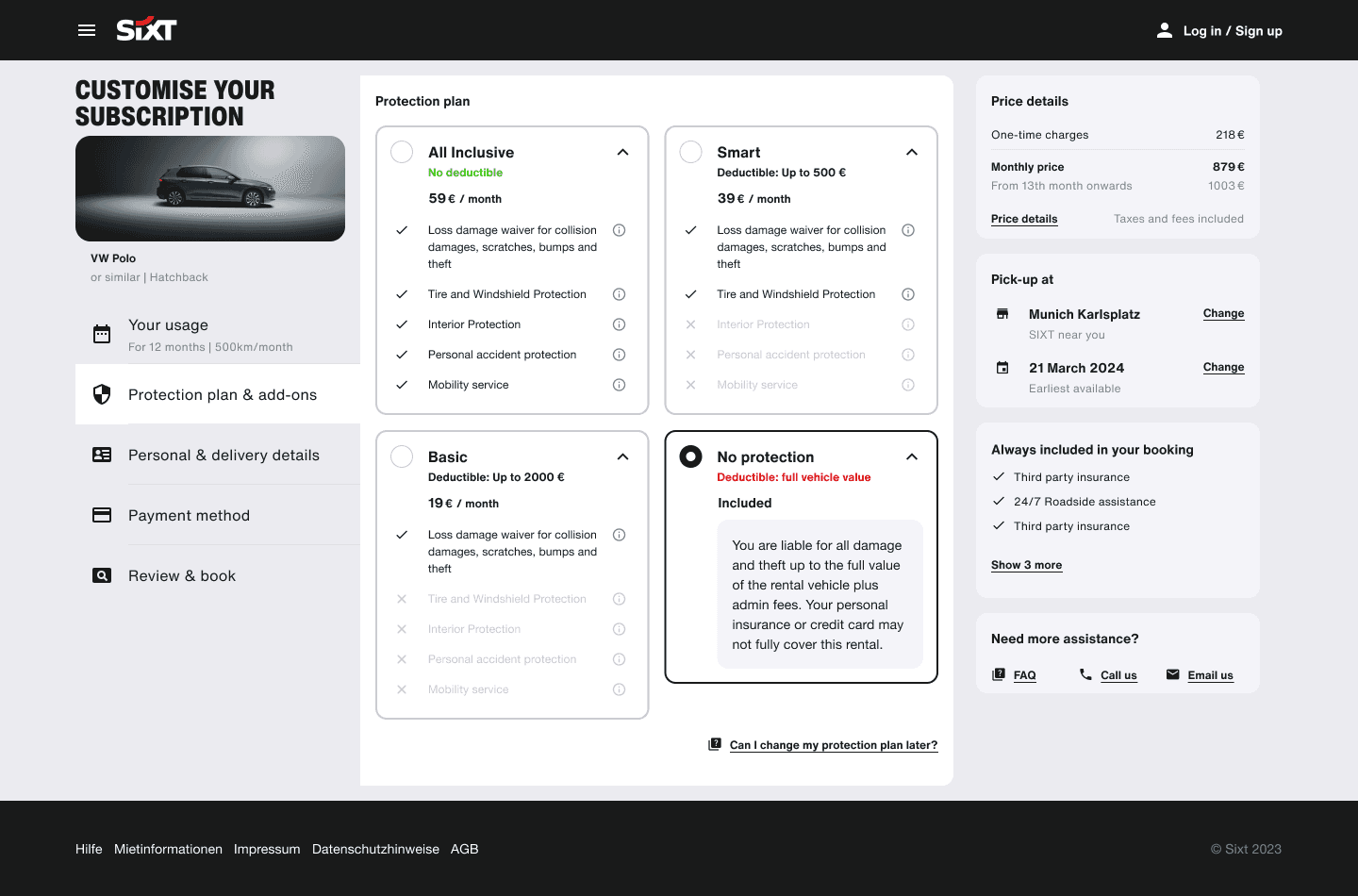
Architecture update
Yet another UX proposal to completely change the BE architecture.
Integrating a guest login flow
Making payment optional
Delivering anytime anywhere, thus removing the location and date search parameters
This resulted into the whole config and checkout within a single page
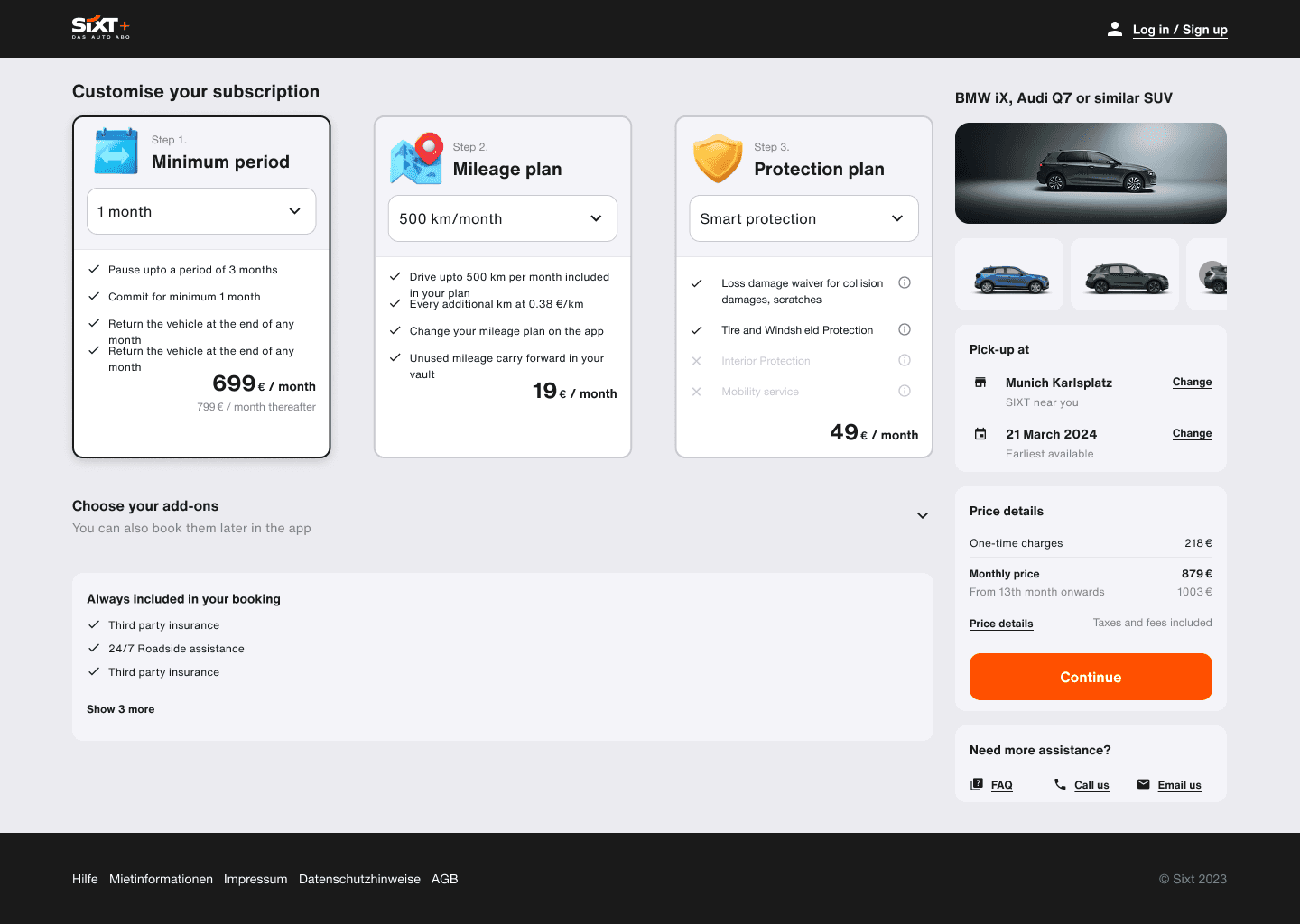
Revamping the FE
Notable UX recommendations
Single page, single view, no scroll offer config
Users can make budgetted calculations easily
Overview of inclusions and exclusions of individual config mentioned right below
Personal details page as a separate page, but with earlier config as editable items at top
Collapsing add-ons as they are not frequented
Notable UI recommendations
Creating cards for each user decision
Constant placement of primary CTA within the first fold
Align horizontally for easier budgetting, and comparing
Introducing icons to improve distinction between steps and create a visual anchor
Introducing car carousel for similar cars
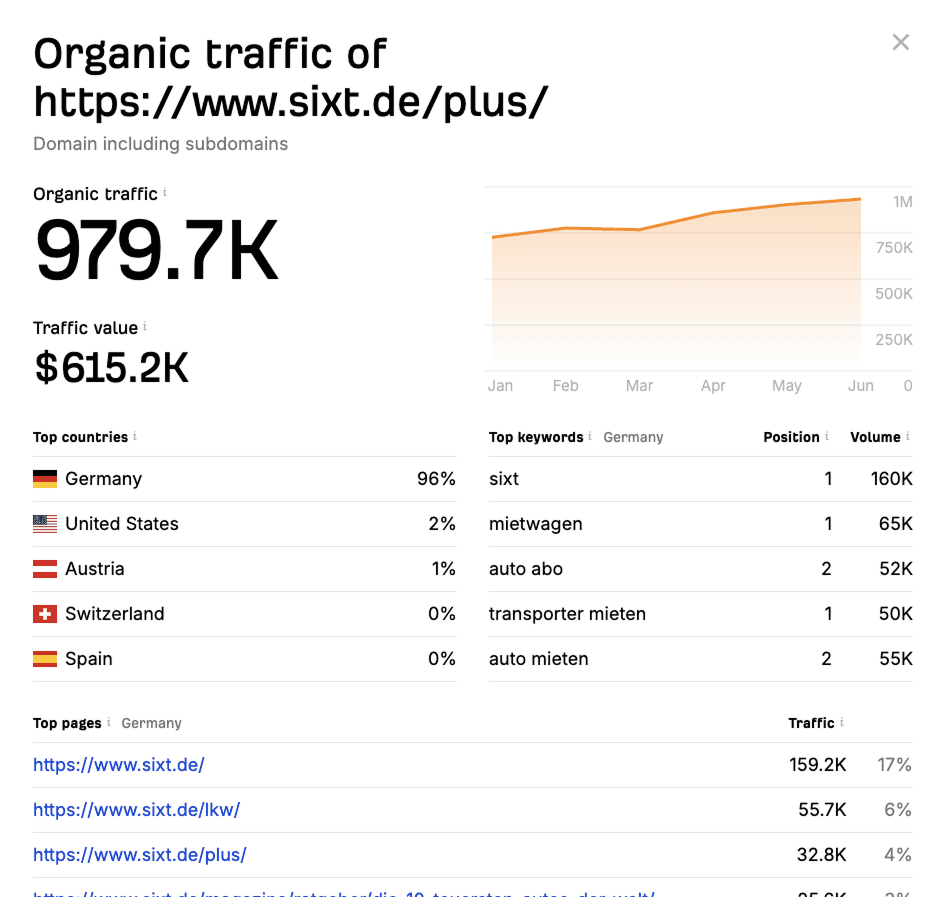
As SIXT+ started expanding, every single section has been put to test, either a qualitative or quantitive, or both. In parallel to the evolution of the web subscription configuration, the app counterpart also went thro the same process, at times giving entirely different result than the web.
Alongside it, countless other factors that influence the configurator, such as login, different payment orchestrators, downstream dependencies on vehicle images, add-ons & pricing, vouchers, requirement of having a low sticker price, pre-selections, packages, and an unending list.
How does it look and feel to the users?
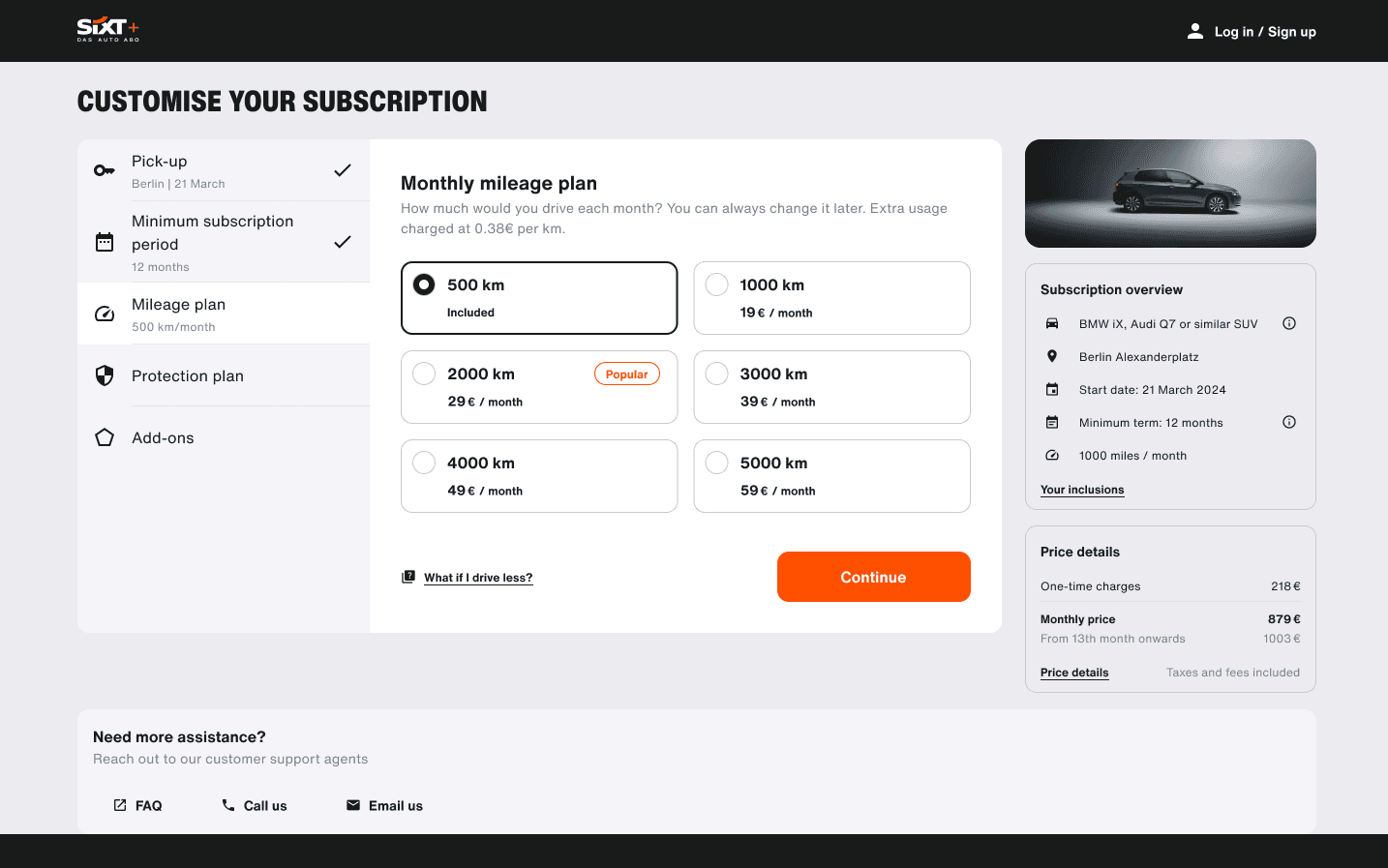
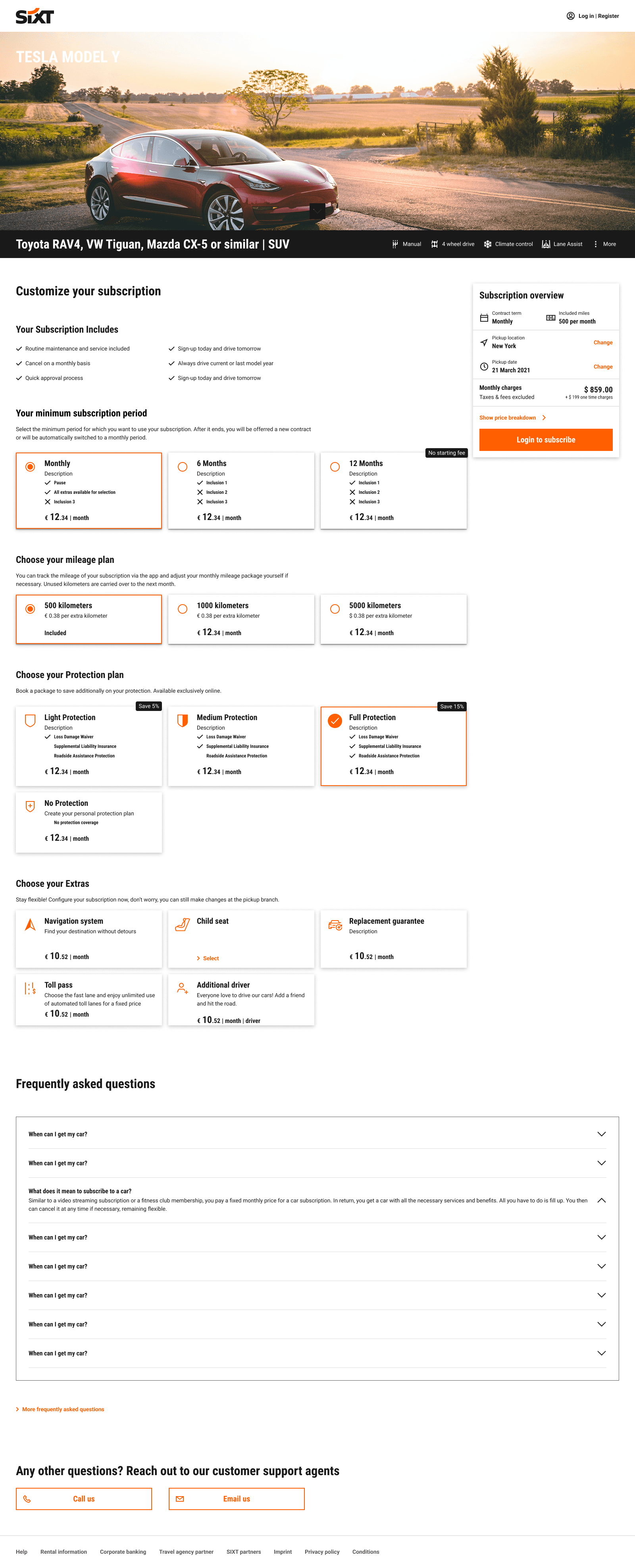
Version 9
Here is the current proposal for the subscription configuration.
Notable UX improvements
Single page, vertical offer config
Users can make budgetted calculations easily
Users stay in context of the decision, one decision per scroll/focus
Overview of inclusions and exclusions of individual config mentioned right below
Personal details page as a separate page, but with earlier config as editable items at top within chips
Collapsing add-ons as they are not frequented
Notable UI improvements
Creating cards for each user decision
introducing chips as floating or tabbed for config selection to keep consistent component use, thereby reducing decision fatigue and confusion
Adding step numbers
Constant placement of primary CTA within the first fold
Align horizontally for easier budgetting, and comparing
Introducing icons to improve distinction between steps and create a visual anchor
Introducing car carousel for similar cars