Making design work
A board decision to increase Electric Vehicles (EVs) inventory and its impact on product and design preparadness
The Strategy layer
This is the outermost layer with the inception of the idea
The team and I, would then intricately examine the idea with the user needs and/or business goals
The Strategy layer
This is the outermost layer where the inception of the idea is presented.
It is intricately tied to user needs and/or business goals
Goals
Increase SIXT+ EV subscriptions by 70% by 2030
Staggered goal annually
In-fleet different EVs from OEM
Their content creation and management
User pain points
Use case anxiety
Range anxiety
Need uncertainty
Charging east
Brand uncertainty
Tech luddite users
Tax implications
Tech challenges
Downstream dependencies for car tiles
Vehicle grouping
OEM Data grouping,
consistency and maintenance
Design
Fake door test
Separate funnel
Communication on all channels
Position to OEMs as a paid test drive
Product
Impact analysis
Monthly increase in onboarding subscribers
The Synthesis layer
This is the second layer where the idea is viewed from a design lens
I would create a design strategy here for the problem/idea exploration
The Scope layer
This is the third layer. The idea at hand is checked for feasibility from tech, content, business, and even legal.
Answering the question, 'What are the functional requirements' ?I would then tie the incremental changes, feature improvements within some MVP framework with the product managers
Defining the scope for a physical as well as digital world.
Extrapolating the user pain points out of the digital world with RSA communication
Bridging the gap with the digital

RSA & Branch trainings
RSA e-Learning and onboarding
Vehicle FAQ
OEM and car review websites
Vehicle demos
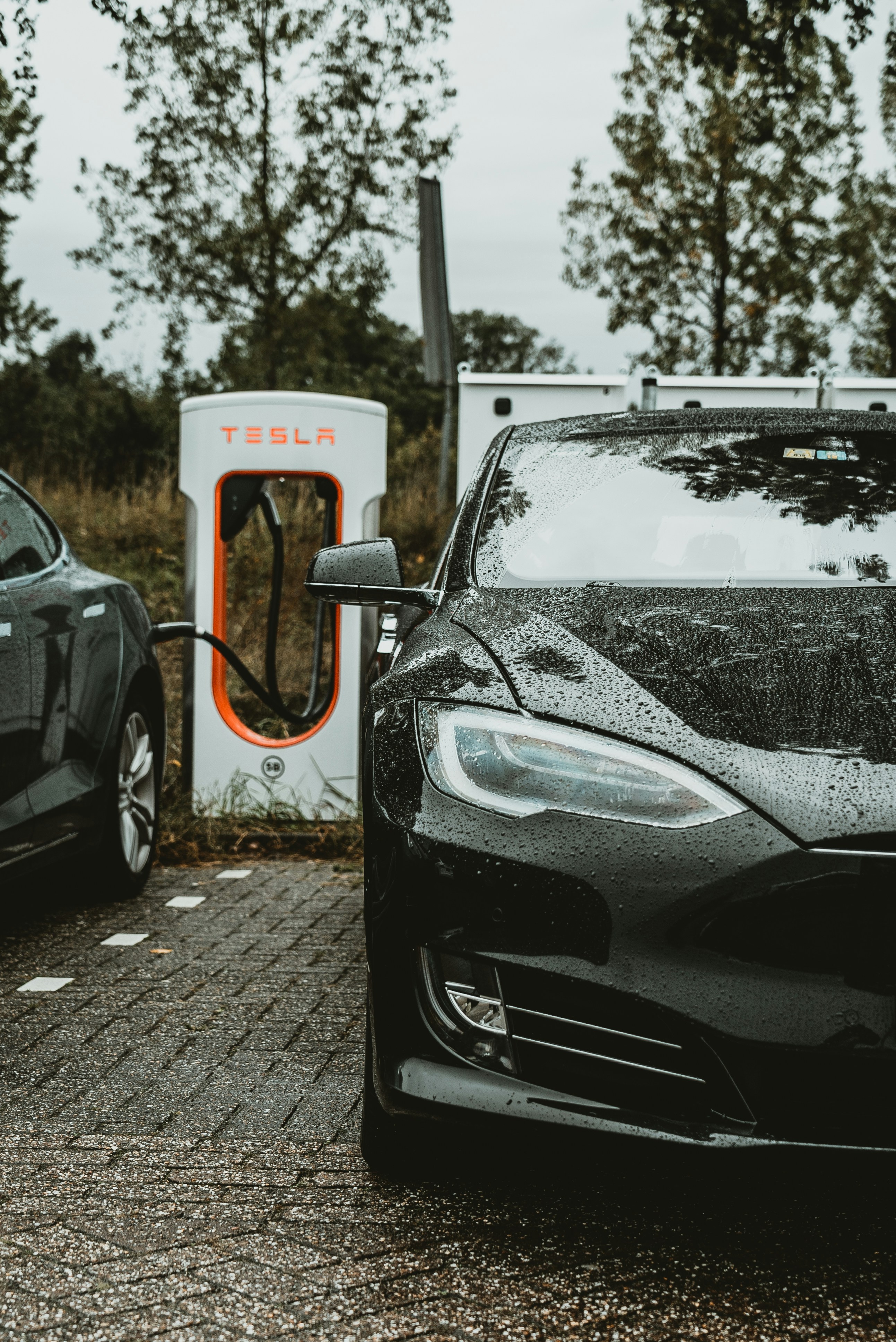
Vehicle Demo
Gather FAQs about vehicle to digitize
Vehicle exchanges and reasons
Digital Design intervention
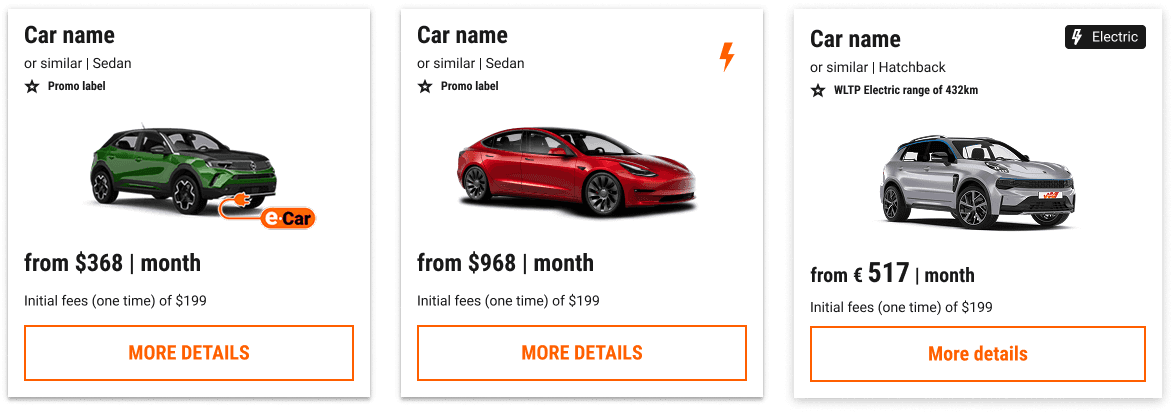
Introduction of vehicles on Landing page
Electric icons for offer tile
Placement, range info, filters, etc.
Branch visit findings
About Sixt+ & EVs | Common questions to RSAs about EVs | Insights |
|---|---|---|
Most EV subscribers have experience driving EVs and only about 20% first time driving. | Range | Customers who booked EV most of them, had previous experience of driving it. So, they didn’t have as many questions. |
Tesla model X, Y, long range are most subscribed. | charging points which to use, | Customers who were offered EVs who booked regular car as free upgrade as there was shortage in the normal car fleet, most customers said no to EVs - due to either |
There are Audi e-tron SUVs at similar cost, but they are not in demand as Tesla. | apps to use find charging locations, | Not driven an EV before |
The MG PHEV Hybrid SUV is also subscribed but it has some mechanical issues leading to complaints and sometimes changing the vehicle. | For diamond customers EV charging prepaid card - not applicable to international customers | Unfamiliar with range and where to charge |
Then smaller EVs like Renault Twingo, Peugeot, Opel Mokka, Citroen eC4 are also subscribed. | for Platinum customers an EV recharge card is provided – they can load the card & use it for recharging the vehicle. | Didn’t want to worry about charging etc. |
The Structure layer
This is the layer where the normally understood design work commences
Here I would 'Structure' the research / test & results, the information architecture, the touchpoints, etc.
Prep work completed, move towards ideations and iterations
Offer tile
Next step for gauging intent was to have an electric vehicle only card within the offer list.
This was a guaranteed electric model, designed as a surprise me, until the inventory was filling up with Tesla, MG, BYD, etc. which weren't yet categorised.
This also resulted in testing whether intent is affected by a 'Surprise car'
Another business model that was tested was paying per km, instead of a monthly included mileage plan.
Fake door test
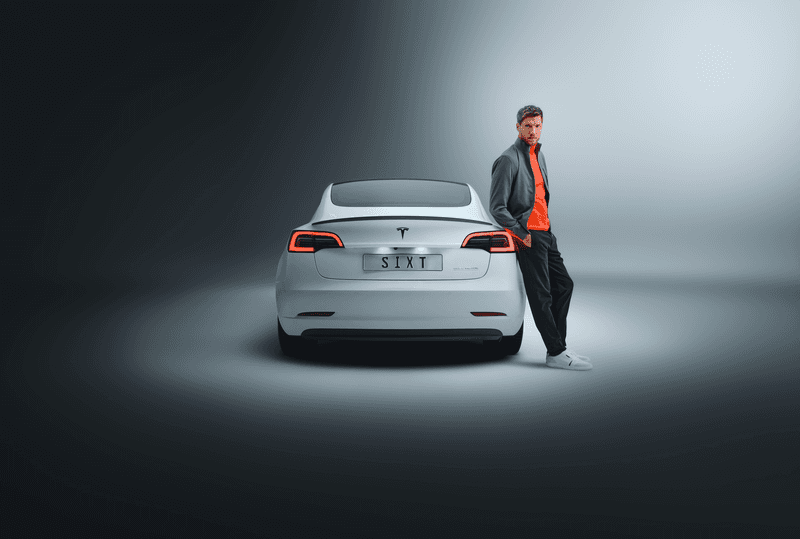
To test customer intent, a banner image was pushed on the SIXT+ Homepage.
This prompted to register the clickrates and also with an option of 'Notify me' when the cars are available for booking.
This was a way for lead generation.
The Skeleton layer
This is the layer where the information and content is arranged and presented. A common output is a set of wireframes.
It is here where a framework or a template is envisioned, also taking into consideration the UI and design system, navigation.
The Surface layer
This is the outermost layer perceivable to the audience, customers and users, basically, the final screens
I would create how should the product look and feel emphasising visual design, flow, patterns, system feedback, etc. This would be done entirely using existing or creating newer design system components
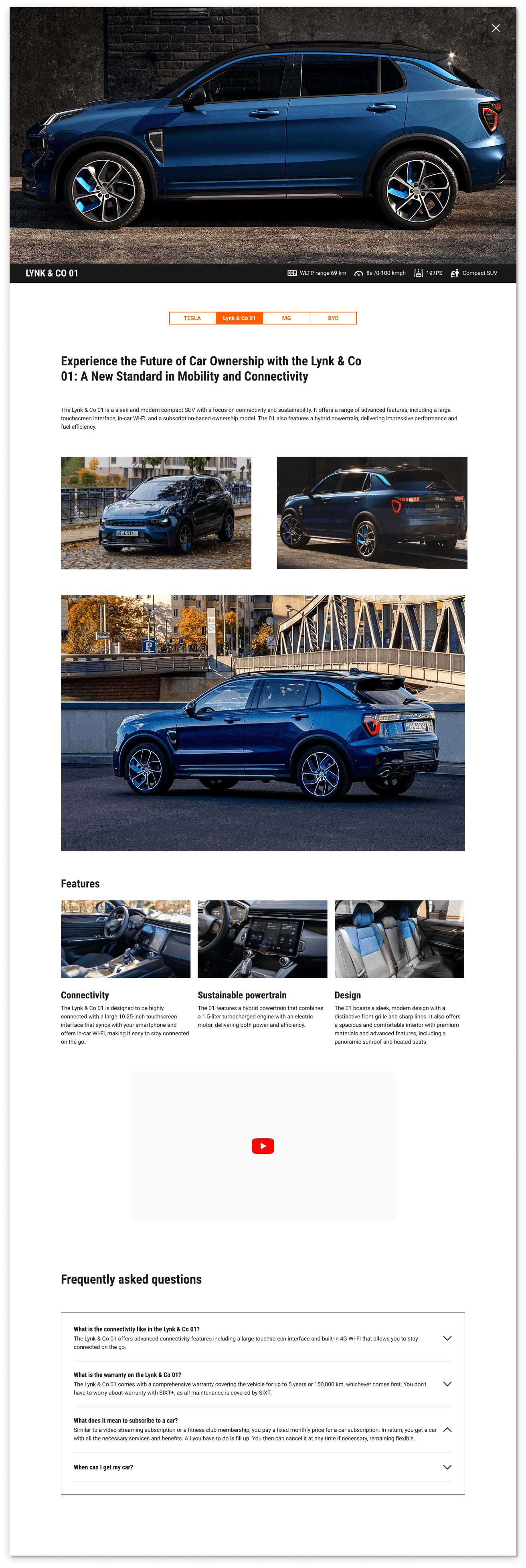
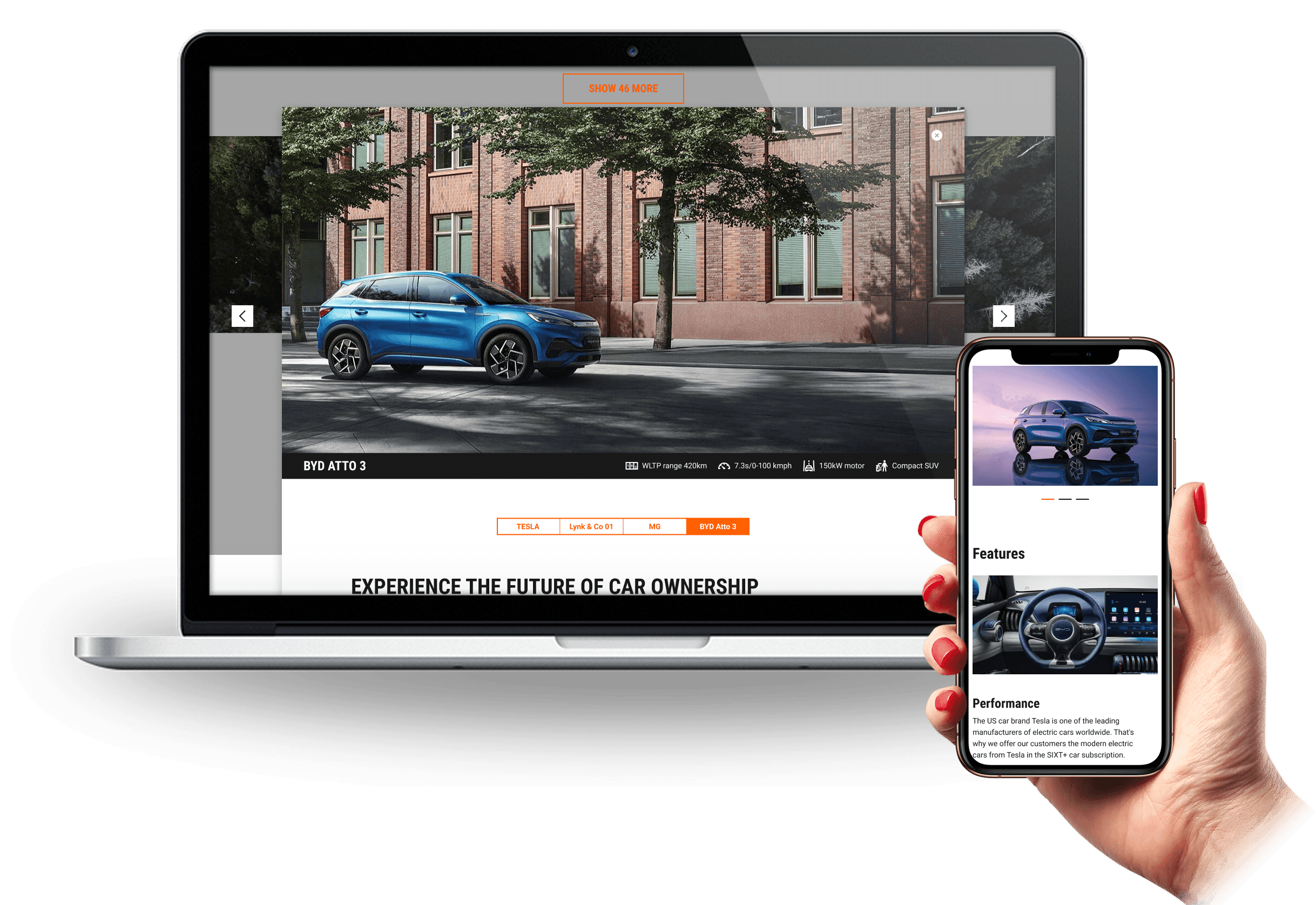
Final design for the vehicle spotlight
A vehicle spotlight pop-up is finally introduced targeting each kind of vehicle, focussing on EV for this problem at hand
Collated vehicle offerings swiped through for similar models
Respective vehicle attributes
Images and Videos sourced from OEM
Contextual FAQ's indexed
Dedicated vehicle page
Used for EV, however, can be repurposed for any vehicle
Prioritised SEO components
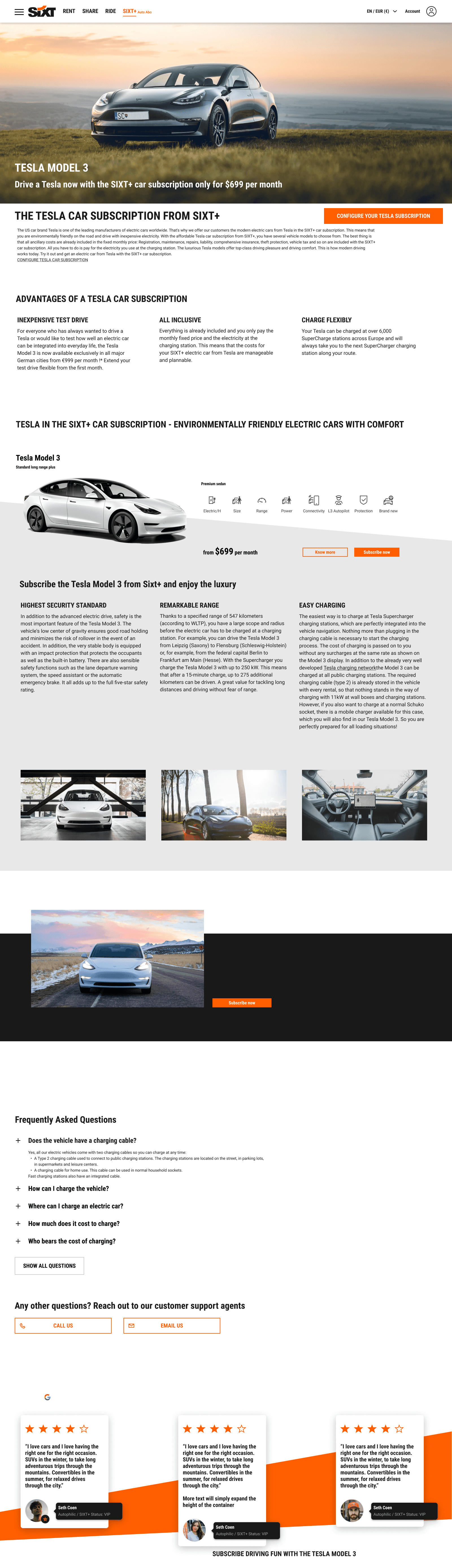
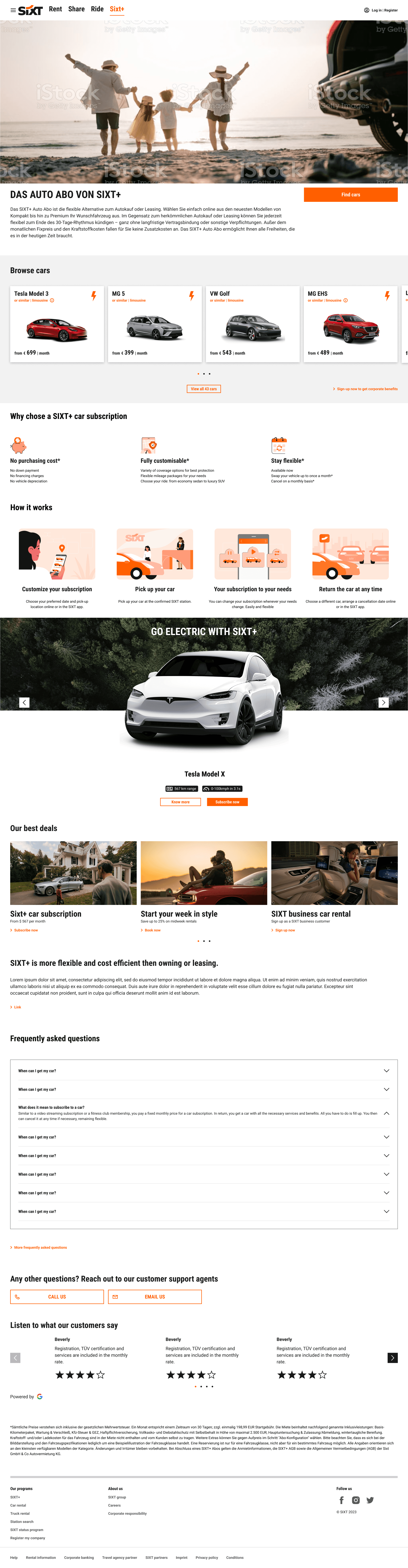
Vehicle spotlight on homepage
A dedicated vehicle promotion spotlight is created on the SIXT+ home page.
This spotlight, can be repurposed for any vehicle category available in the inventory
The Significance layer
Though not a part of the original classification in the book, I've added this to emphasise the need for Significance measurement in design efforts so as to assert a seat at the table
I would try, alongwith the product managers, to determine the objective functions; before and after metrics; through statistical significance, reviews and testimonials, surveys, page or purchase conversions, and even resolution of customer doubts before reaching customer care
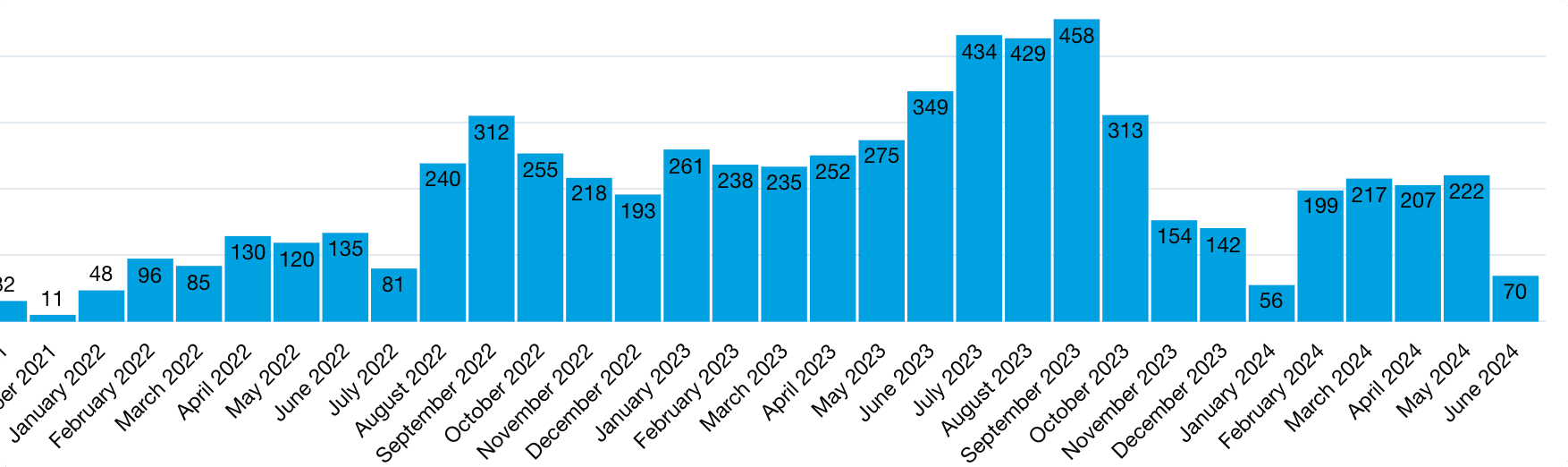
Rise of EV subscriptions
Addressing customer anxiety
More info about EV offerings from SIXT
Refer a friend (a parallel project)
Surprise car
Agent trainings
Upgrades
Direct sales over back-office
General rise in awareness and familiarity around EV Awareness
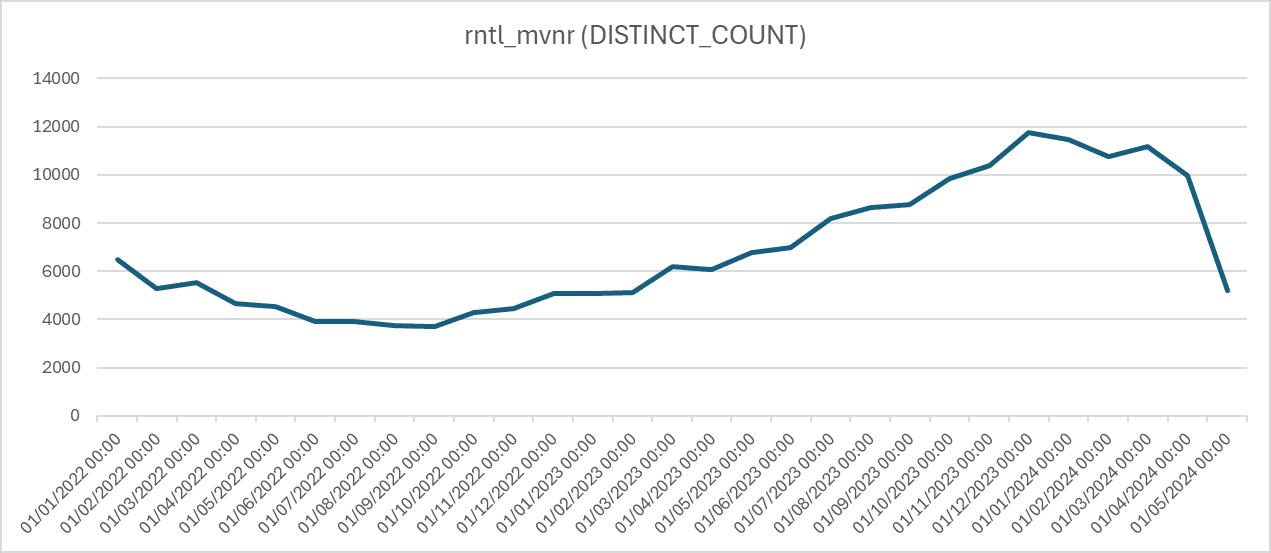
Above: Overall subscriptions
Below: EV contributions
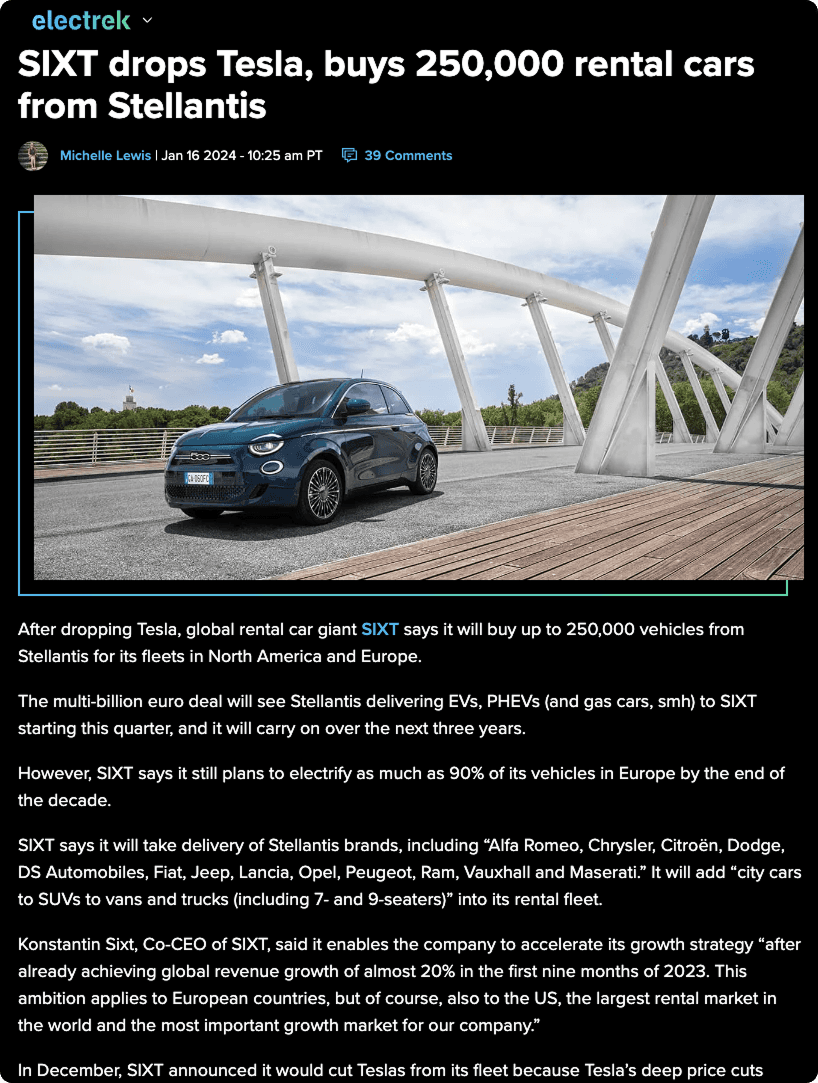
Going forward :)
Source: https://electrek.co/2024/01/16/sixt-drops-tesla-buys-250000-rental-cars-from-stellantis/
The S layers
Thanks for reading till the end, in these attention deficit times.
The S layers that I have broken down each project into, is a my attempt to use the Elements of User Experience by Jesse James Garrett, to position my work.
These elements, often perceived as planes, travel from abstractness towards concretisation.
Basically this would be the design process followed for each initiative, either entirely or in parts.
Click to know more.